Keynotes
Keynote Speakers
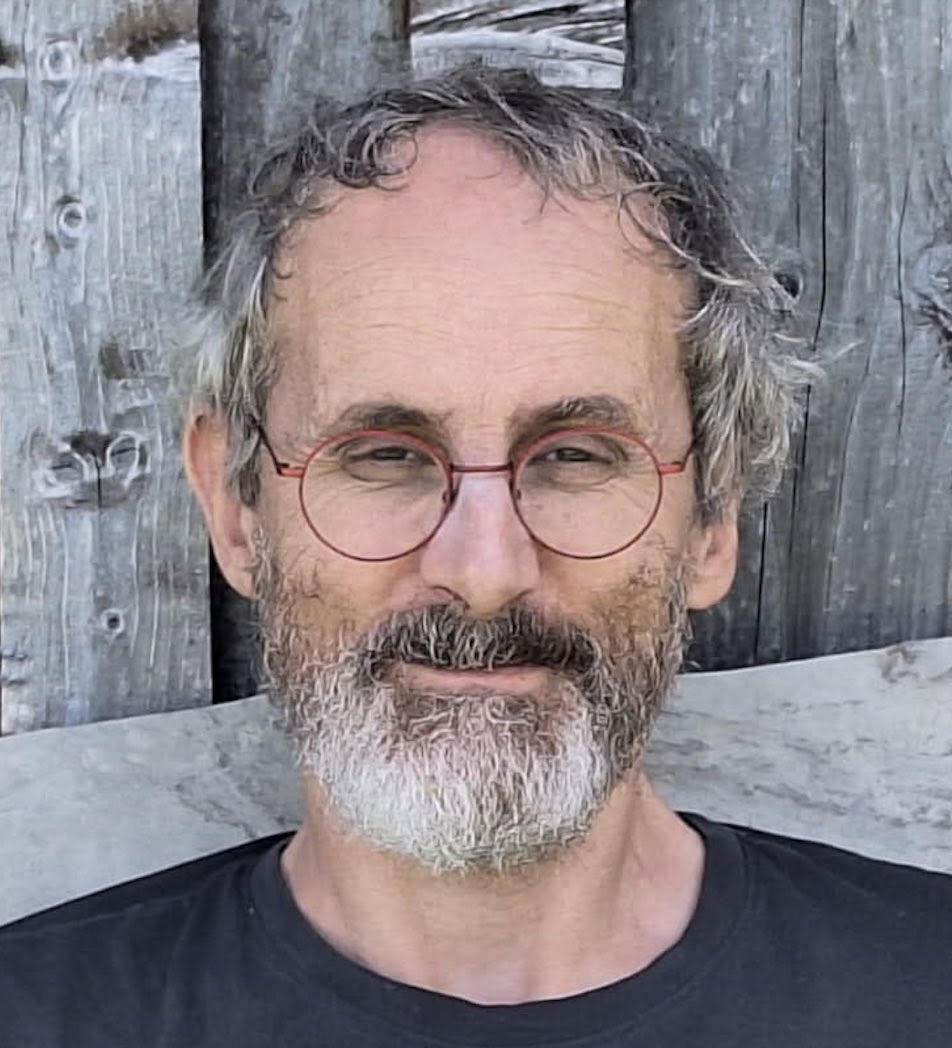
Stéphane Letz
Head of Computer Music Research Laboratory, GRAME – Centre National de Création Musicale (Lyon, France)
Researcher, Emeraude Research Team · Core member of the Faust development team
The Faust Ecosystem Onion: Exploring the Layers of an Audio DSP Language in the Age of AI
Abstract
This keynote explores Faust as more than a programming language for audio DSP. It presents Faust as a layered ecosystem that connects audio signal processing, efficient compilation, cross-platform deployment, rich libraries, and real-world applications.
Starting from its functional and declarative core, the talk shows how Faust enables developers, artists, and researchers to describe DSP at a high level and deploy it across applications, plugins, web, mobile, and embedded systems.
Finally, in the context of today’s AI revolution, the keynote discusses how the Faust ecosystem can be expanded through coding agents, and how integrated tools (such as MCP-based components) and hybrid approaches, including differentiable DSP and AI-assisted audio systems, can further extend its role as a foundation for the next generation of sound technologies.
Biography
Stéphane Letz is the Head of the Computer Music Research Laboratory at GRAME – Centre National de Création Musicale in Lyon (France) and a researcher in the Emeraude research team.
He is a co-author of the Faust programming language, created by Yann Orlarey in 2002, and a core member of the Faust development team.
He has previously been involved in the development of the JACK Audio Connection Kit (JACK), particularly on the jack2 version, which introduced multi-processor scalability and support for operating systems other than Linux.
Stéphane’s research interests include formal languages for musical composition, language design, compilation and architecture for musical systems, as well as audio and DSP programming for real-time systems.
Julius O. Smith III
Stanford University · Audio DSP pioneer and key contributor to the FAUST ecosystem
Faust and AI Programming
Abstract
Modern software engineers write very little code directly. Instead, we set the agenda, define verification loops, oversee development and testing, test-drive systems, and inspect results as needed. We must know enough to formulate, read, and test code, but not necessarily write it ourselves.
Given that AI agents are increasingly taking over the writing, what languages should we keep, and which can be dropped? How does Faust fit into this ecosystem as a domain-specific language for audio signal processing?
This presentation is based on discussions with the latest Claude Opus and ChatGPT models available.
Biography
Julius O. Smith III is one of the leading figures in audio signal processing and computer music. Professor Emeritus at Stanford University and long-time researcher at CCRMA, his work has fundamentally shaped modern digital audio, from physical modeling synthesis to large-scale audio applications.
A key contributor to the FAUST ecosystem, he has co-authored foundational research using FAUST, contributed to its DSP modeling approaches, and actively supported the community through teaching, workshops, and technical discussions. His influence is deeply embedded in many FAUST libraries and design patterns.
He is also the instructor of the online course Real-Time Audio Signal Processing in Faust, one of the most comprehensive educational resources on FAUST, widely used by students, researchers, and developers worldwide.
Through decades of research, teaching, and community engagement, Julius Smith has played a pivotal role in bridging advanced DSP theory and practical FAUST programming.
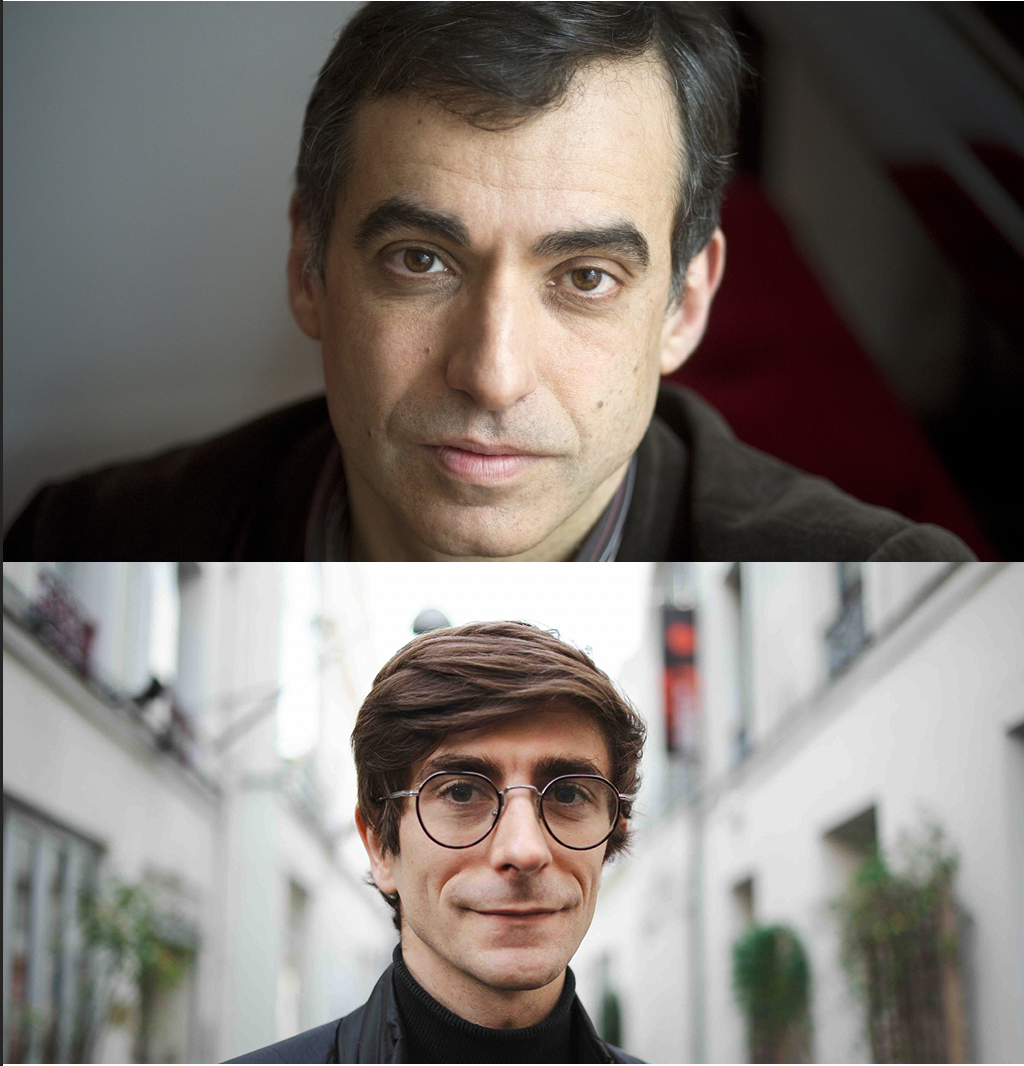
Alain Bonardi and Paul Goutmann
Université Paris 8 - CICM / Musidanse - ERC Advanced Grant Project G3S
Faust by musicians for musicians: research, creation and teaching
Abstract
How can a programming language as Faust inspire and help shape our research, research-creation, and teaching activities in a Music Department? The answer may differ from what would be given in a computer science department. What value do we see in teaching Faust to music students and musicologists, in using this language to generate timbres (rather than just notes) in electroacoustic and mixed media music, or in establishing our software foundations for research-based creation? We will demonstrate how this language aligns with our practices, providing examples from both our teaching in the third year of the Bachelor’s program and our research projects on the sound space—such as the ERC Advanced Grant G3S (Generative Spatial Synthesis of Sound and Music)—as well as our work in computer music composition.
Biography
Alain Bonardi is a professor of Computer Science and Music Creation at Paris 8 University, where he is based in the Music Department and is a member of the Musidanse laboratory. Together with Anne Sèdes, he co-directs the CICM (Center for Research in Computer Science and Music Creation). Since September 2025, he has been the Principal Investigator of the ERC G3S project (Generative Spatial Synthesis of Sound and Music, 2025–2030). He is also a composer and computer music designer.
Paul Goutmann is an artist, researcher, and lecturer in computer music at the CICM (University of Paris 8). He is currently a postdoctoral researcher on the ERC Advanced Grant G3S project on spatial audio and previously received a doctoral fellowship from the ArTeC Graduate School. His research focuses on the spatial dimension of sound, its musical implementation, and its recording. As an active artist, he develops a practice that blends electroacoustic composition, computer music and recording.